
Do I Need a Sump Pump Battery Backup? (Spoiler: Yes, You Do)
In Northeast Ohio, the storms that generate the most groundwater are also the ones most likely to knock out your power. A battery backup sump pump isn't optional — it's essential. Here's why and what to look for.
By AB Drain & Construction
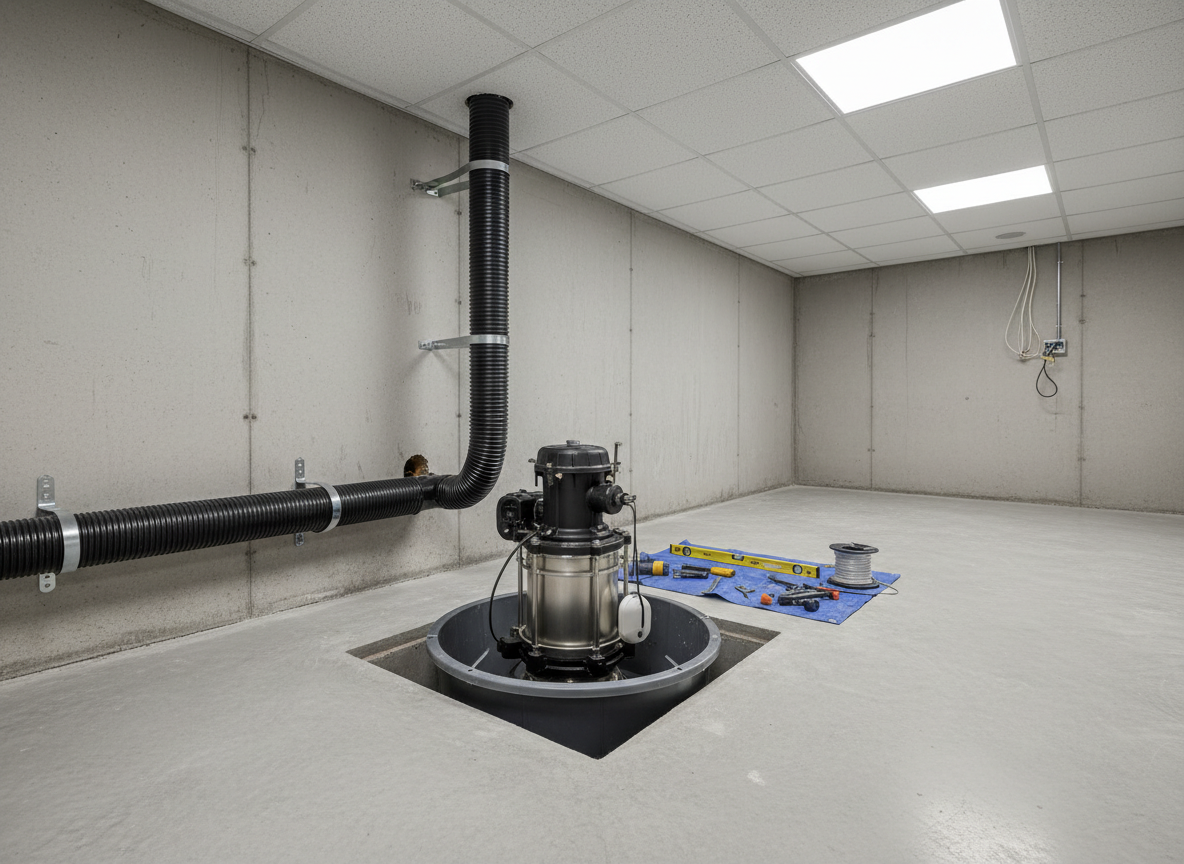
We get calls every spring and summer from homeowners with flooded basements whose primary sump pump stopped working — not because the pump failed, but because the power went out. In Northeast Ohio, this scenario plays out dozens of times every storm season, and it's almost entirely preventable with a battery backup system.
The Problem with Primary Pumps Alone
Your primary sump pump is electric. It runs on the same power grid that powers your lights, refrigerator, and television. During the severe thunderstorms that roll through Mahoning, Trumbull, and Columbiana Counties from April through September, power outages are common — and they almost always coincide with the heaviest rainfall and the highest groundwater levels. The pump stops working exactly when it needs to work hardest.
According to utility data, the Youngstown metropolitan area experiences an average of 8 to 12 significant power outage events per year. During many of those events, homes with primary-only sump pump systems experience basement flooding.
How Battery Backup Systems Work
A battery backup sump pump operates independently of your home's electrical system. It uses a deep-cycle AGM (Absorbed Glass Mat) battery — similar to the battery in a car but designed for deep discharge cycles — to power a separate pump installed in the same pit as your primary pump.
The system monitors the water level in the pit continuously. If the primary pump fails for any reason — power outage, motor failure, float malfunction — the backup pump activates automatically and continues pumping at a reduced but significant rate until power is restored or the emergency is resolved. Most quality backup systems will also send an alert (audible alarm, text notification on Wi-Fi-enabled models) when they activate.
What to Look for in a Backup System
Not all battery backup systems are equal. The key specifications to compare:
Pumping capacity: Look for a backup pump capable of moving at least 1,000 to 2,000 gallons per hour at your discharge head height. Undersized backup pumps cannot keep up with high-volume water events.
Battery capacity: A larger battery provides more backup runtime. Typical systems provide 5 to 10 hours of continuous pumping on a full charge, but this varies significantly by system and water volume.
Battery maintenance: AGM batteries degrade over time. Quality systems include a battery health indicator and alert you when the battery needs replacement — typically every 3 to 5 years.
Alarm system: The backup pump should alert you when it activates, when battery charge is low, and when the battery needs replacement.
Beyond the Backup: The Full-System Approach
For homes with significant water entry — common in Northeast Ohio's clay soil conditions — we often recommend a dual primary pump configuration in addition to a battery backup. Two primary pumps provide redundancy during high-volume events when one pump's capacity isn't sufficient, and the battery backup covers power outage scenarios.
If your current sump pump setup is a single pump with no backup, you're one bad storm and one power outage away from a flooded basement. It's one of the most cost-effective protections you can add to your home. Call us for an assessment of your current system.