
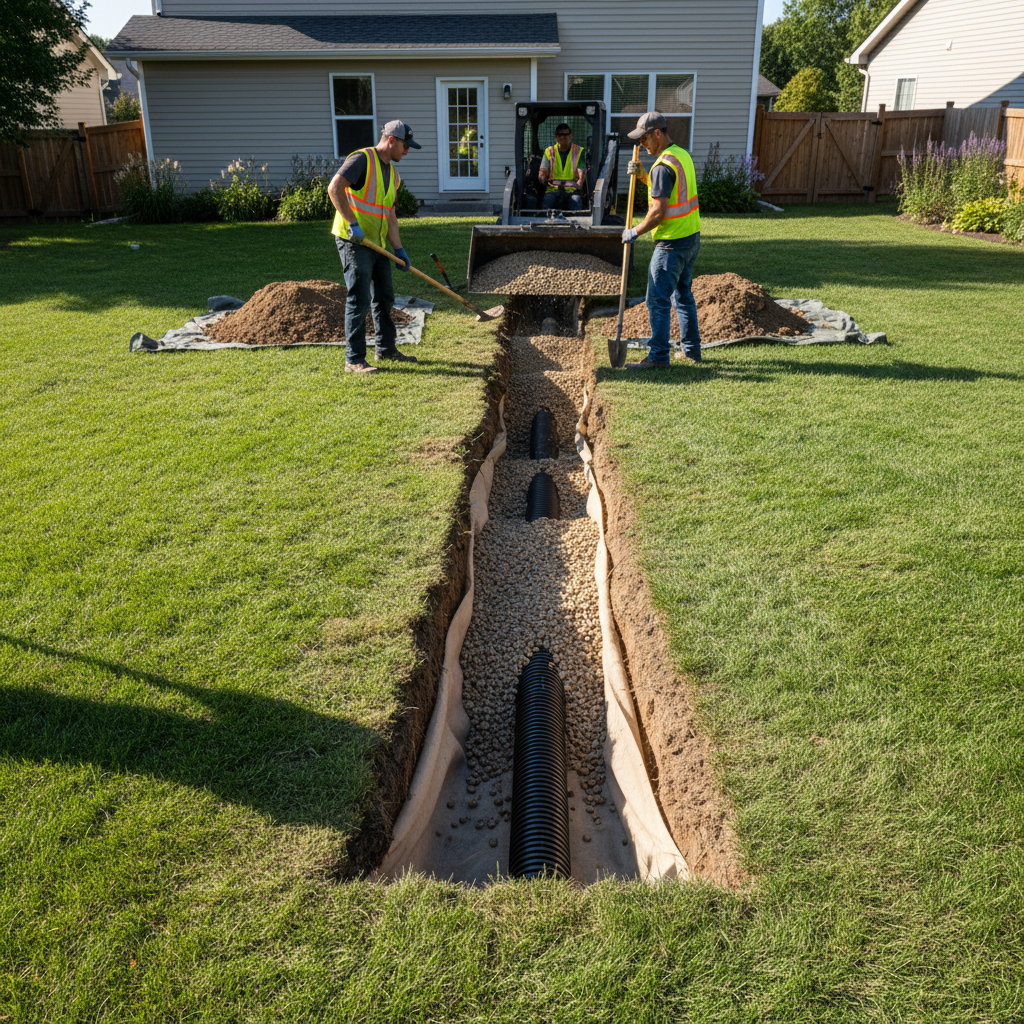
French Drain Installation in Canfield, Ohio
Soggy yard in Canfield? Water traveling a long way across a large lot, collecting in a broad low area, or pooling near the house? AB Drain and Construction LLC evaluates how water actually moves across your property before recommending a French drain — and designs a drainage solution that moves it safely away. No bull.
"Dry Basement/Yard ~ NO BULL"
Documentation available upon request
Signs Your Canfield Yard Has a Drainage Problem
Most wet-yard problems follow a pattern. If any of these sound familiar, it is worth having the drainage looked at before the next storm.
Yard stays wet long after rain
If parts of your lawn are still soft or saturated days after a storm, the water has nowhere to go.
Standing water that won't go away
Puddles or pooling that lingers until they evaporate or soak in are a sign of poor drainage.
Muddy or unusable lawn areas
Sections of the yard that stay soggy and kill off grass or make the space unusable.
Water collecting near the foundation
Water pooling next to the house is a drainage problem and a basement water risk.
Water moving toward the home
When runoff flows across the lot and toward the foundation, the drainage path needs to change.
Downspouts dumping water near structures
Gutter runoff discharging next to the house or a low spot dumps large volumes of water in one place.
Repeated wet spots in the same places
When the same areas flood every rain, the water is following a predictable path that can be redirected.
Water near garages, sheds, patios, or driveways
Runoff collecting around outbuildings, hardscape, and low corners of the property.
Not Every Wet Yard Needs the Same Drain
AB Drain does not approach every wet yard by blindly installing the same French drain. Before we recommend anything, we want to understand where the water is coming from, how it moves across your property, where it is collecting, and where it can safely discharge. A French drain is one drainage tool — it is the right answer for some yards and the wrong answer for others. We tell you what your property actually needs. No bull.
How a French Drain Works
A properly planned French drain is designed to intercept and manage subsurface or accumulating water and move it toward an appropriate discharge point. It is not simply a pipe buried in gravel — the layout, the path the water takes, and where it ends up all matter.
Intercepts subsurface and accumulating water
A French drain is designed to catch water moving through the soil or collecting in low areas and carry it along a planned path.
Aggregate and perforated components work together
A 4-inch SDR35 triple-perforated pipe enclosed in a woven pipe sock is bedded and covered in #57 river wash stone, letting water reach the pipe while filtering out soil and debris that would clog the system.
A planned discharge location matters
The water needs somewhere safe to go — a pop-up emitter, dry well, or low area away from the home — and that is planned before installation.
Roof runoff may need separate solid piping
Concentrated gutter water is often better carried in a solid pipe to its own discharge point rather than dumped into a perforated French drain.
French Drain vs. Downspout Drainage
Perforated French drain systems and solid underground downspout drainage serve different purposes — and using the wrong one can make a drainage problem worse.
French Drain (Perforated)
Designed for subsurface water and accumulating groundwater. Water seeps in through the perforations and is carried along the drain to a discharge point.
Downspout Drainage (Solid)
Designed for concentrated roof runoff. Solid pipe carries gutter water underground to a discharge point without letting soil or debris into the line.
Dumping roof runoff into a French drain can backfire.
Releasing a large volume of concentrated gutter water directly into an improperly designed perforated French drain can overwhelm a system meant for subsurface flow and contribute to drainage problems. That is why AB Drain evaluates roof runoff as part of the overall drainage picture — not as an afterthought.
AB Drain's Yard Drainage Approach
Inspect the Wet Areas
We look at where the water is collecting and when it shows up.
Identify Likely Water Sources
We figure out where the water is originating — roof runoff, subsurface flow, grading, or neighboring runoff.
Evaluate How Water Moves
We trace how water travels across the property before it collects.
Evaluate Downspouts & Grading
We check where downspouts discharge and whether the ground slopes toward or away from the home.
Identify Discharge Options
We find a practical, safe place for collected water to go.
Recommend the Right System
Based on the findings, we recommend the drainage system that fits your yard — not a one-size-fits-all trench.
Install the Drainage Solution
Our experienced crew installs the system cleanly and restores the surface.
Review the Completed Work
We walk you through the finished drainage work so you understand how it functions.
Recent AB Drain Projects
Examples of our French drain and yard drainage work.
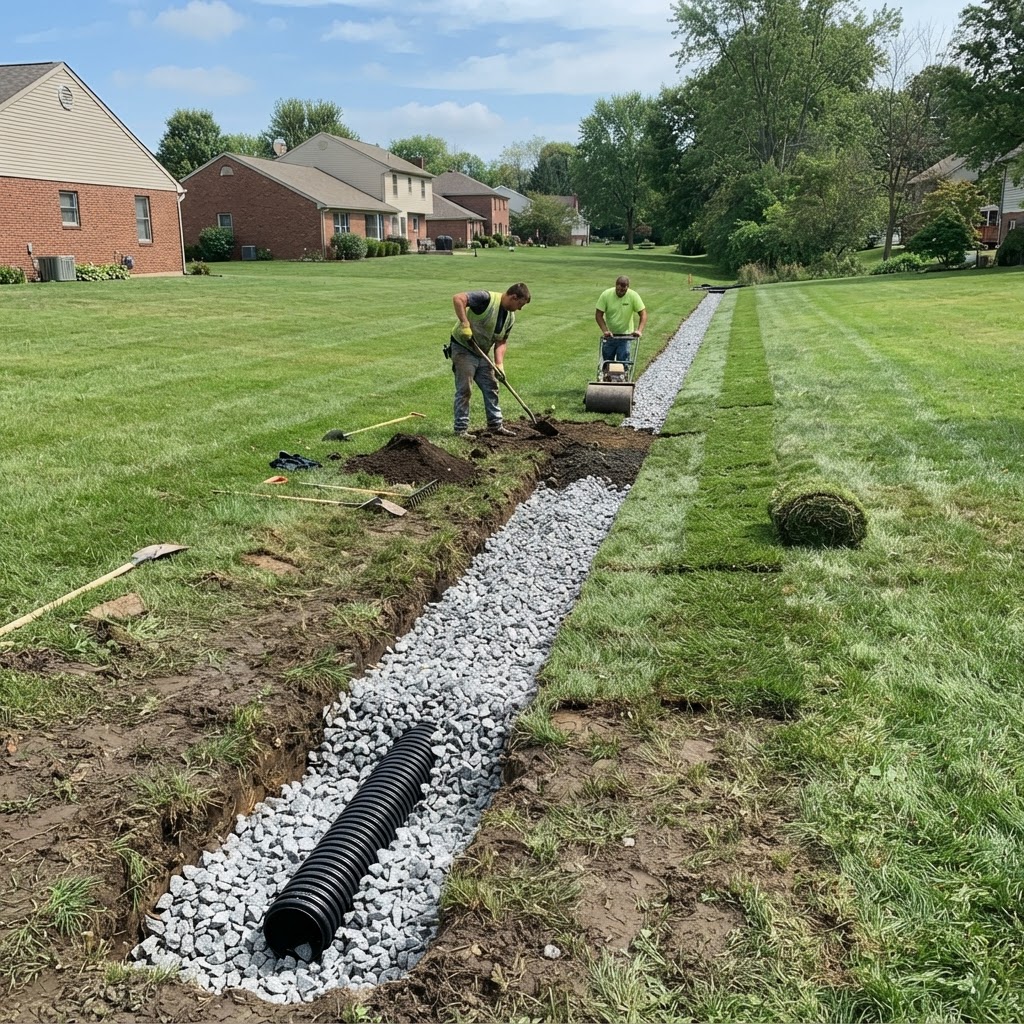
French Drain Across Large Lot
Canfield, OH
A long French drain run with perforated pipe and clean stone backfill installed across a spacious Canfield lot, intercepting water that traveled a long way before collecting against the home.
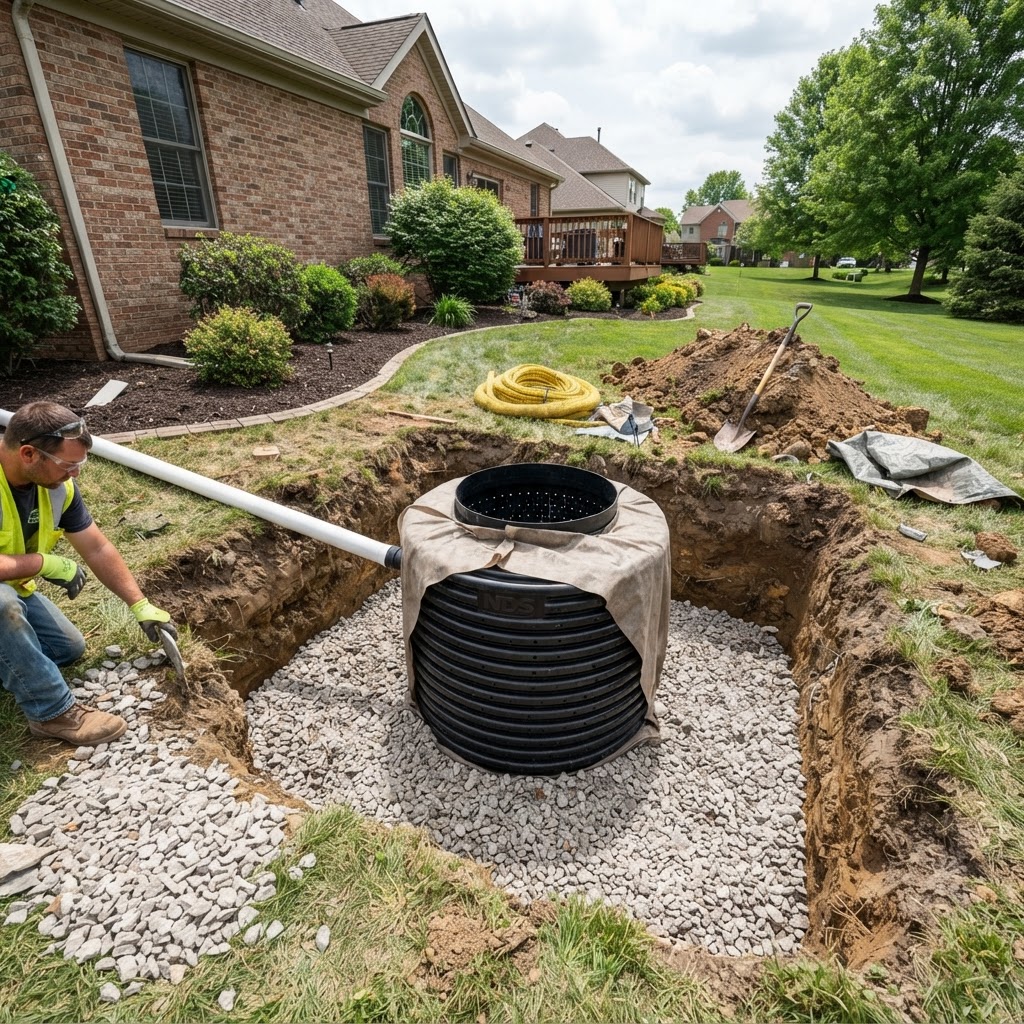
Dry Well Installation
Canfield, OH
A large perforated dry well tank set in clean stone, giving collected drainage water a place to slowly disperse into the surrounding soil on a Canfield property with limited discharge options.
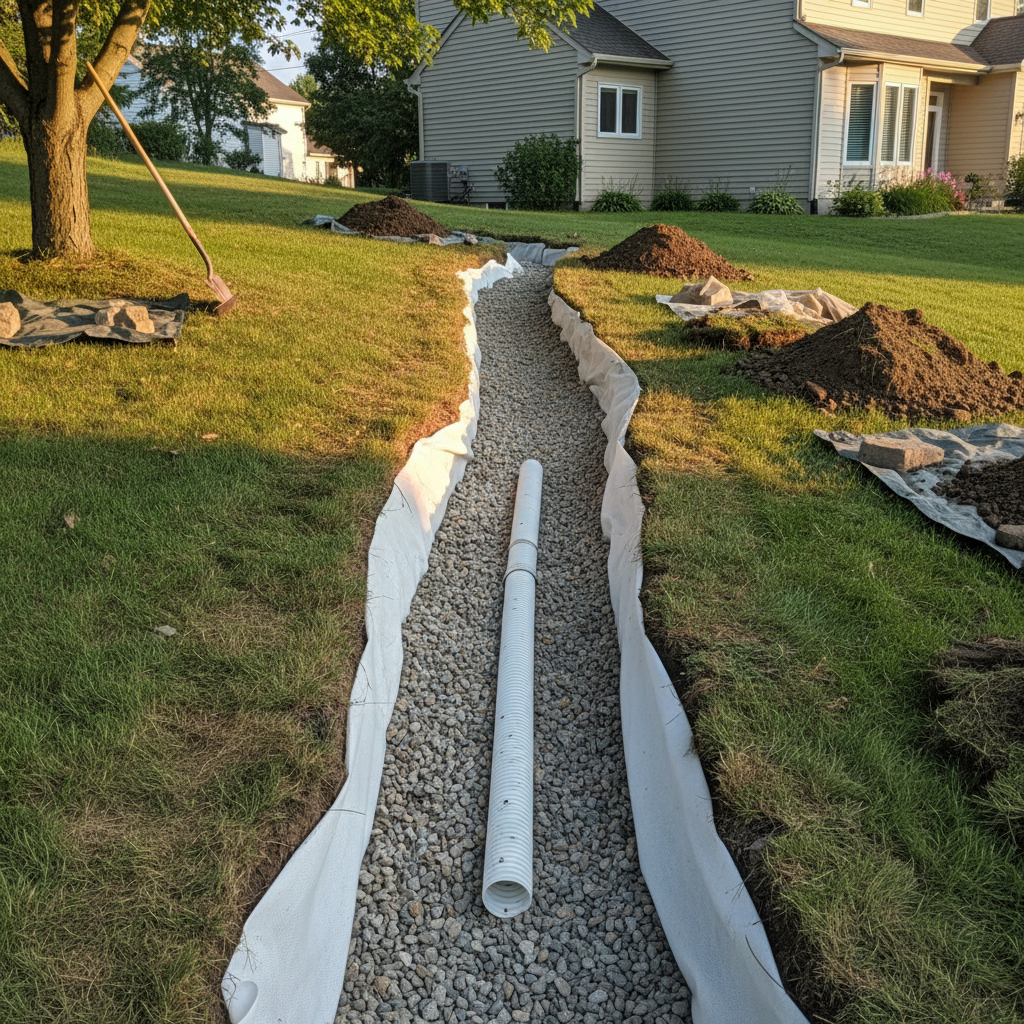
French Drain — Pipe & Stone Detail
Canfield, OH
Perforated drain pipe wrapped in filter fabric and set in a bed of clean stone. The fabric prevents soil from clogging the pipe while allowing groundwater to freely enter and flow to the discharge point.
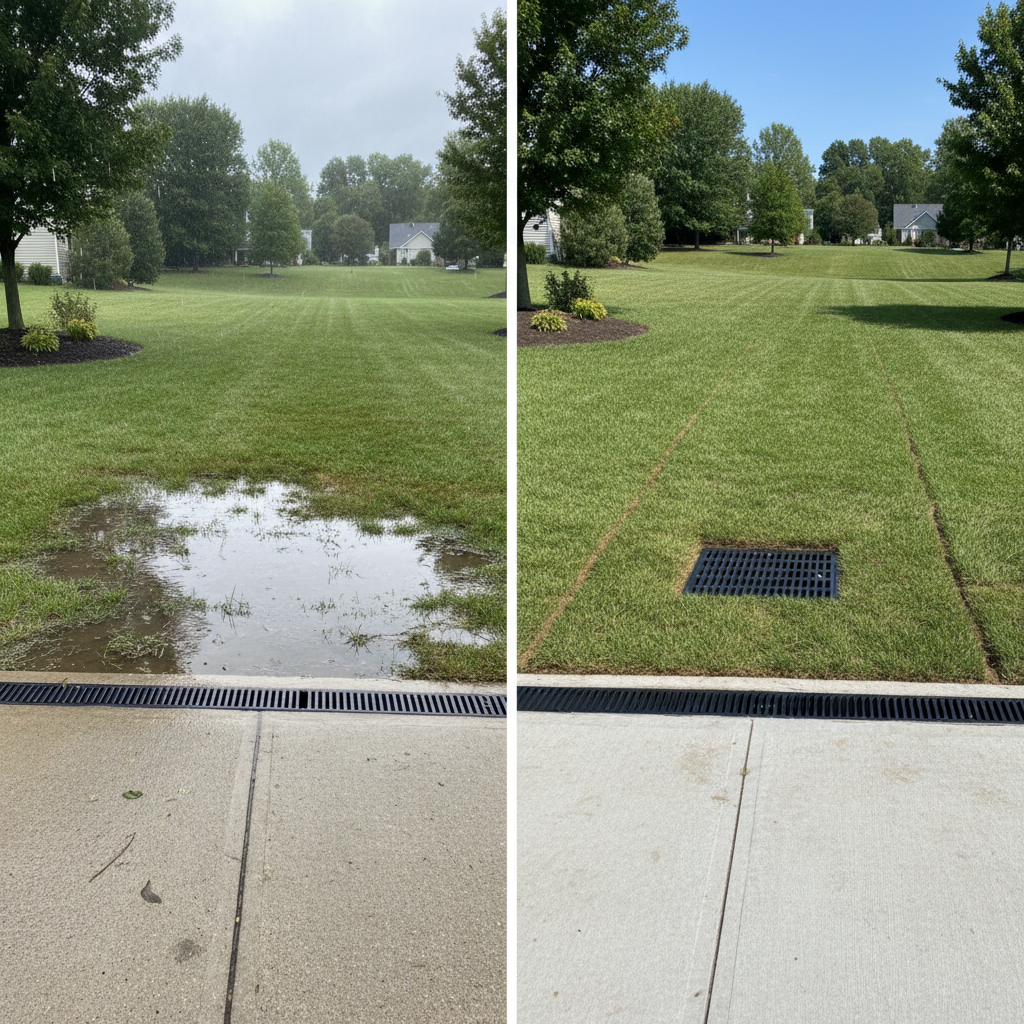
Catch Basin & Channel Drain — Before & After
Canfield, OH
Left: low point in driveway collecting standing water with no outlet. Right: catch basin with grate installed at the low point, connected to underground piping that routes water to a safe discharge location away from the property.
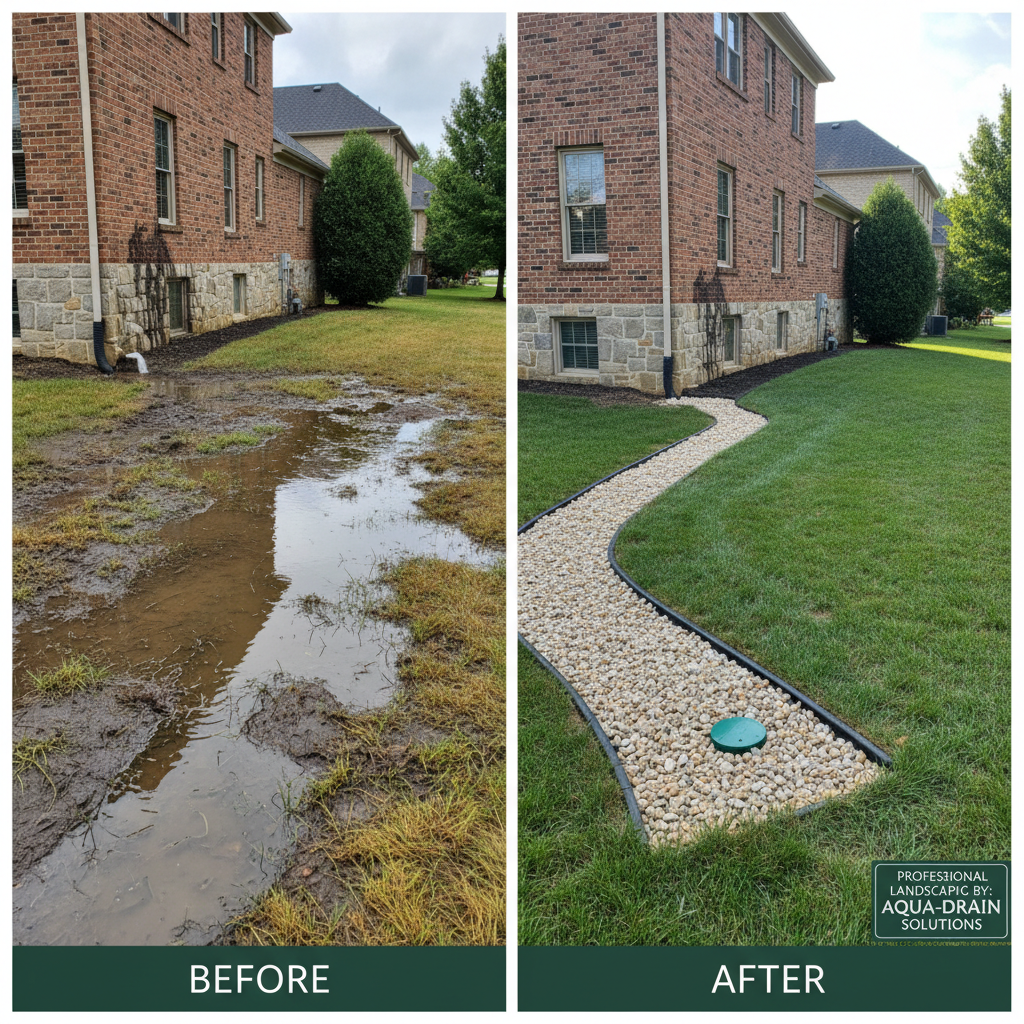
French Drain Installation — Before & After
Struthers, OH
Left: saturated yard with standing water pooling against the foundation after heavy rain. Right: French drain trench backfilled and lawn restored — subsurface water now intercepted and carried away before reaching the home.
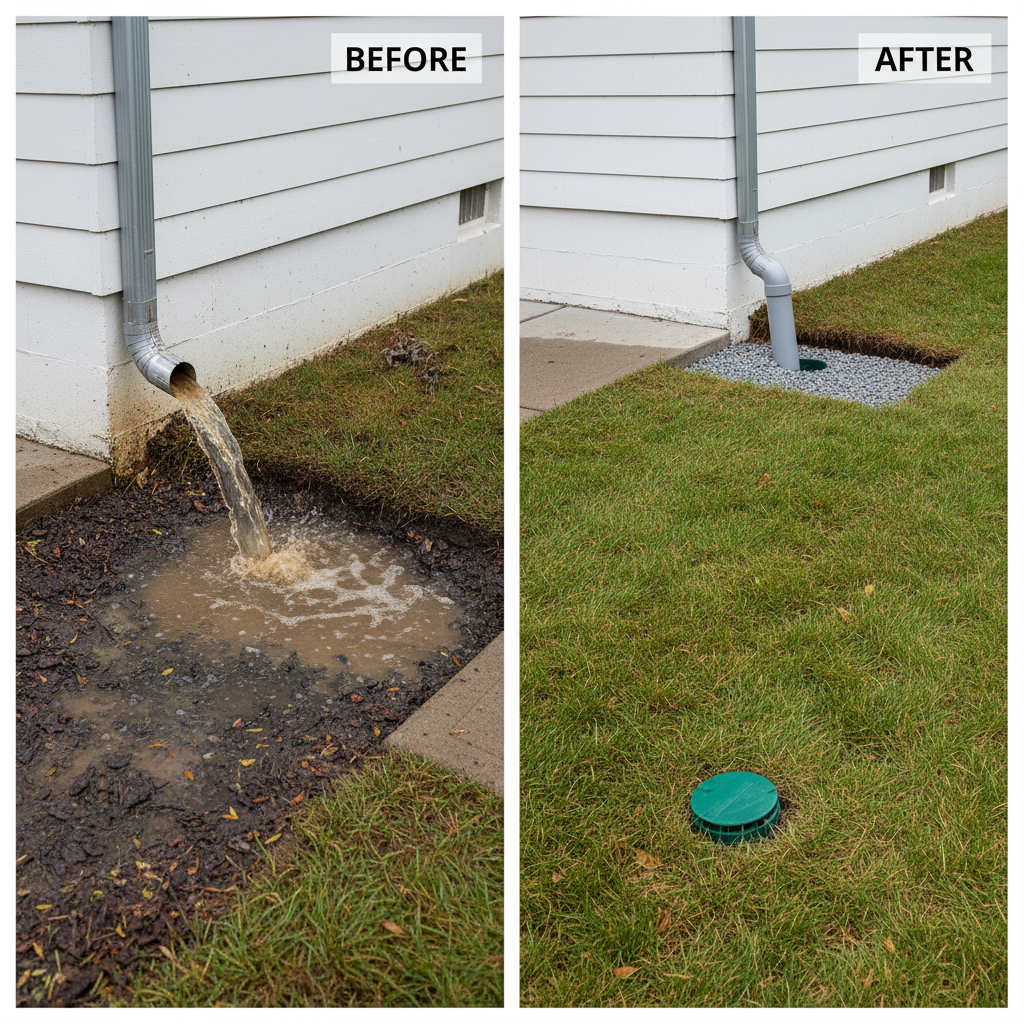
Underground Downspout Drain — Before & After
Boardman, OH
Left: downspout discharging directly against the foundation, saturating the soil with every rain event. Right: underground pipe connected to the gutter outlet and routed 20+ feet away, discharging at a pop-up emitter in the yard.
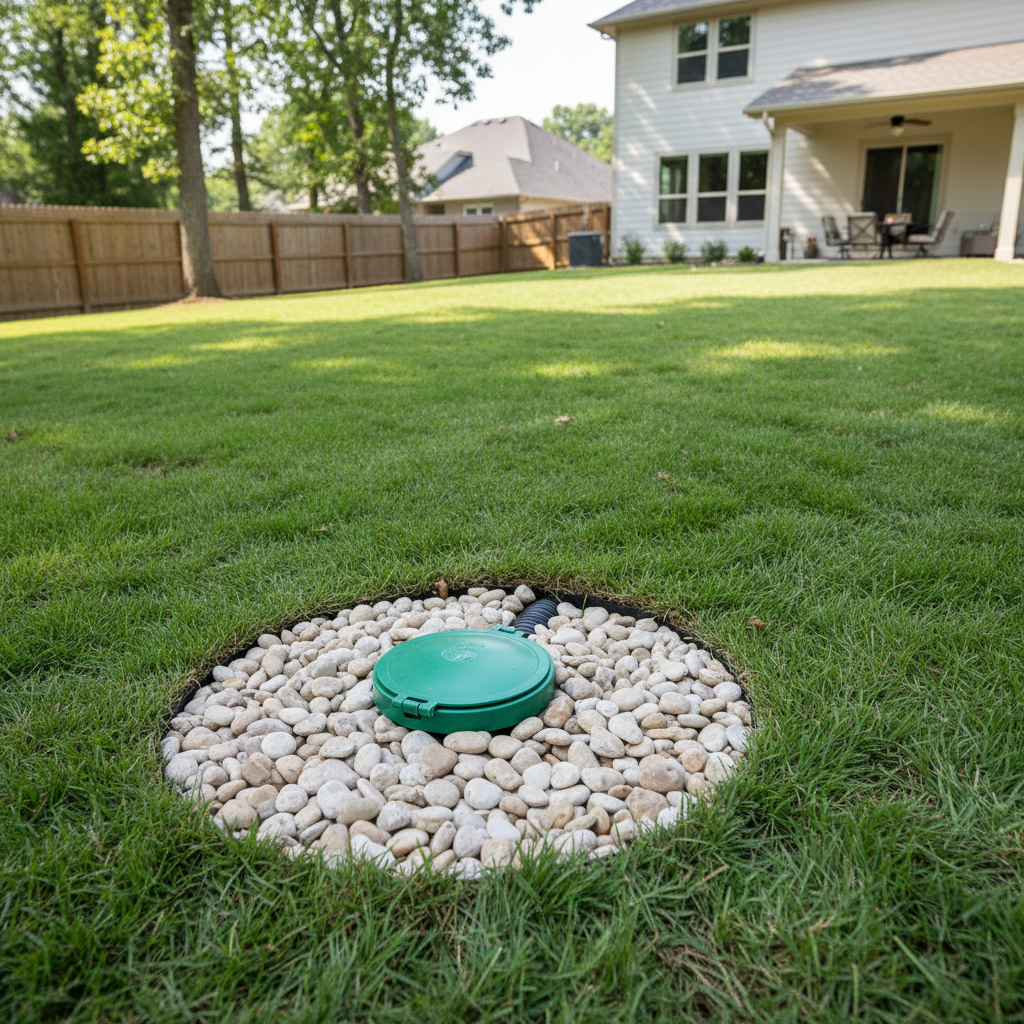
Yard Drainage — Pop-Up Emitter & Finished Lawn
Hubbard, OH
A pop-up emitter at the end of the underground drain line opens automatically under water pressure to release collected water far from the foundation, then closes when dry to prevent debris and pests from entering the pipe.
French Drain & Yard Drainage — Completed
Hubbard, OH
Completed integrated yard drainage system with French drain, catch basin, and underground downspout connections all tied into a single discharge line. Surface restored to its original grade with proper slope away from the foundation.
Why Choose AB Drain for Yard Drainage
Drainage-Focused Experience
Yard drainage and French drain installation is a core part of what we do — not an add-on service.
Owner Involved & On Site
The owner is involved and on site — you deal directly with the people responsible for the work.
Direct Communication
We explain what we found, what we recommend, and why — in plain language, not jargon.
Practical Recommendations
We recommend the drainage solution your property actually needs — not the most expensive option.
Customized Drainage Planning
Every yard is different. We plan the drainage path and discharge location around your specific lot.
NO BULL Approach
We figure out where the water is really coming from before we recommend a system. No upselling, no bull.
What AB Drain Customers Say
Reviews from homeowners across our service area in Ohio and Pennsylvania.
After years of dealing with a wet basement, AB Drain installed a complete drainage system. It's been bone dry ever since — even during the heaviest storms. Worth every penny. The crew was in and out in two days and left the place spotless.
Yard Drainage in Canfield, Ohio
Canfield is known for its larger residential lots, and bigger properties can come with longer drainage runs and more complex water movement. Water that starts on a higher portion of a lot can travel a significant distance before it collects in a broad low area, along a property line, or against a structure — and a short drain placed only in the obvious wet spot often is not enough.
On a Canfield property, standing water and persistent saturation can come from one source or several: broad low areas in the yard, water moving from higher portions of the property toward lower areas, long drainage paths, large roof areas producing concentrated runoff, downspouts discharging into already-wet portions of the property, saturated soil, water collecting along property lines, water moving toward foundations or patios, subsurface water movement, and existing drains that are clogged, undersized, damaged, poorly routed, or no longer effective. These are practical drainage conditions we may encounter and evaluate — not conditions we assume every Canfield property has.
A French drain should be designed around the actual movement of water across the property, not dropped into the wet spot and called done. Before recommending one, AB Drain evaluates where the water originates, the changes in elevation across the lot, where water naturally wants to travel, where it collects, whether the problem is surface water or subsurface water, how much the downspouts are contributing, how close it is to the house and foundation, and what discharge locations are actually available. Not every wet area should automatically receive a French drain.
An exterior French drain generally works like this: a trench is installed along the intended interception or drainage path, a perforated pipe allows subsurface water to enter, clean drainage stone provides drainage space around the pipe, and appropriate filtration helps reduce soil migration into the stone where applicable. The drain needs a functional outlet or discharge strategy, and the placement and elevation matter as much as the pipe itself. We design around the actual water source and site conditions rather than prescribing one exact construction method for every property.
Different water sources often require different drainage methods. A perforated French drain is designed for groundwater and subsurface yard water; solid underground downspout drains carry concentrated roof runoff; catch basins and grates collect surface water at a concentrated low point; and grading or other surface-water corrections redirect runoff where appropriate. Because we install all of these, we can match the method to the water source instead of forcing one tool to do a job it was not designed for.
A French drain may be the right approach for large soggy areas, water traveling downhill across a lot, wet property-line areas, persistent saturation after storms, water moving toward the foundation, subsurface seepage emerging lower on the property, or areas that remain wet long after the surface water has disappeared. Surface puddles at an isolated low point, however, may sometimes be better handled with a catch basin or surface drain instead. We tell you which one your yard actually needs.
The project photos on this page show examples of our French drain and yard drainage work for Canfield-area properties and across the Mahoning Valley — including long French drain runs across large lots, dry well installations where discharge options were limited, catch basins and channel drains at low points, and integrated systems tying French drains, catch basins, and underground downspout connections into a single discharge line. The owner is involved on site from diagnosis through completion, and we explain in plain language why a particular system is recommended before any work starts.
We are fully insured and bonded, and licensed where required, and because we install French drains, underground downspout drains, catch basins and grates, sump discharge drainage, and related yard-drainage solutions — and can identify the drainage problems that contribute to basement water — we can recommend the system your property actually needs. For the full range of solutions, see our French Drains master service page. No bull.
When water collects near your foundation, it is often a basement water problem as well. See our Canfield basement waterproofing services for how we handle water that has reached the foundation.
See our Mahoning County French drain installation for broader drainage information across the county.
We also install French drains and yard drainage for homeowners in nearby Youngstown, Boardman, and Poland.
What Affects the Scope and Price of French Drain Installation
Every yard is different. These are the factors that shape the scope and cost of a drainage system — and why a free inspection matters before any recommendation.
Where the water is coming from
Subsurface water, surface runoff, and roof runoff each need different drainage tools. We figure out where the water is actually coming from before recommending a system.
Drainage distance and path
The length of the drainage run, the path across your property, and the obstacles along the way all affect the scope. Longer runs with more obstacles require more excavation and materials.
Discharge location
The water needs a safe, lawful place to go — a pop-up emitter, dry well, or low area away from the home. The available discharge options on your lot affect the system design.
Existing drainage
If you have old buried drains, catch basins, or French drains that no longer work, we evaluate whether they can be incorporated or need replacing. This affects the overall scope.
Roof runoff vs. yard water
Concentrated gutter water and subsurface yard water are different problems that usually need different solutions. We evaluate both rather than automatically treating them the same.
What to Expect During Your Free Drainage Estimate
No pressure, no obligation, no bull. Here is exactly what happens when you call AB Drain for a yard drainage estimate.
We inspect the wet areas
We look at where the water is collecting and when it shows up — not just the obvious wet spot.
We identify the water sources
We figure out where the water is originating — roof runoff, subsurface flow, grading, or neighboring runoff.
We trace how water moves
We evaluate how water travels across your property before it collects, and where it can safely discharge.
We recommend the right system
Based on what we find, we recommend the drainage solution that fits your yard — not a one-size-fits-all trench. You get a written estimate with no obligation.
After Installation: Keeping Your Drainage System Working
A drainage system is a long-term investment. These simple maintenance steps keep it working — and protect your yard through every storm.
Inspect the discharge point
Check your pop-up emitter or discharge outlet periodically to make sure water is flowing freely and the area is not blocked by debris or vegetation.
Keep emitters and grates clear
Pop-up emitters can stick closed, and catch basin grates can collect leaves. A quick check during and after heavy rain keeps the system working.
Watch for settling
Over time, soil may settle above a buried drain line and create a low spot. If you notice the ground sinking above the drain path, let us know.
Monitor during heavy rain
The best time to evaluate your drainage system is during a storm. Watch how water enters, flows, and discharges — and call us if something is not working as expected.
Based in Youngstown — Serving Canfield & the Surrounding Region
AB Drain and Construction LLC is based in Youngstown, Ohio. We travel to serve homeowners across the Mahoning Valley and the broader corridor from Cleveland to Pittsburgh — including Canfield. When you call, you work directly with the owner and the crew doing the work, not an out-of-town call center.
French Drain & Yard Drainage FAQs
Will a French drain fix a soggy yard in Canfield?
Often, yes — but only if subsurface water or accumulating runoff is the actual cause. A French drain intercepts water moving through the soil and carries it to a discharge point. On a larger Canfield lot, the water may travel a long way before it collects, so the whole path matters. We find the source first.
How does a French drain collect groundwater?
A perforated pipe is buried in a trench of clean drainage stone along the interception path. Groundwater seeps in through the perforations, the stone creates drainage space around the pipe, and filtration helps keep soil out of the system where applicable. The water then flows along the pipe to a discharge point planned for your property.
Where should a French drain be placed on a sloped property?
Where it will actually intercept the water — not just in the wet spot at the bottom. On a sloped Canfield lot, that often means placing the drain along the path the water travels downhill, where it can catch it before it reaches the low area or the foundation. We evaluate the elevations and the natural drainage path before recommending placement.
Does a French drain need an outlet?
Yes. A French drain has to move collected water to a functional discharge point — a pop-up emitter, a dry well, a safe low area, or a storm connection where allowed. Without a real outlet, the drain just holds water. Planning the discharge location is part of the design, not an afterthought.
Should roof downspouts connect to a French drain?
Not automatically. Downspouts carry concentrated roof runoff, which is generally better moved in a solid underground pipe to its own discharge point. Dumping that volume into a perforated French drain meant for subsurface water can overwhelm it. We evaluate roof runoff separately and only combine them when the design actually calls for it.
What is the difference between a French drain and a downspout drain?
A French drain uses perforated pipe to intercept groundwater and subsurface yard water along a drainage path. A downspout drain uses solid pipe to carry concentrated roof runoff from the gutters to a discharge point. They handle two different water sources — using the wrong one can make a drainage problem worse.
When is a catch basin better than a French drain?
When the problem is surface water collecting at a specific low point — a driveway low spot, a patio edge, or a yard depression that ponds during storms. A catch basin and grate catch that surface water and route it underground. A French drain is better for subsurface water and broad soggy areas. Many yards need both, and we evaluate which one your property actually needs.
Can a French drain help keep water away from my foundation?
It can be part of the solution when subsurface water is moving toward the foundation. But if roof runoff, downspout discharge, or grading is the main cause, those need to be addressed too. If water is already entering the basement, that is a basement waterproofing issue — we look at the whole drainage picture, inside and out.
Can French drains work across large yards?
Yes — and on a larger Canfield lot, a longer or staged drainage system is often what is needed. The design has to account for the distance the water travels, the slope, and a realistic discharge location at the end. We plan the full path rather than just treating the spot where the water finally collects.
Why does one part of my yard stay wet longer than the rest?
Usually because that area is lower, has slower-draining soil, sits in the path of subsurface water moving downhill, or receives runoff from another part of the lot. Water collects there and has no clear way out, so it stays wet long after the rest of the yard has dried. We trace why that specific area holds water.
Can AB Drain determine where the water is actually coming from?
Yes — that is where every estimate starts. We look at where and when the water appears, the changes in elevation across the lot, the natural drainage path, where downspouts discharge, whether the water is surface or subsurface, and how close it is to the foundation. Identifying the actual source is what tells us whether a French drain is the right solution or a different drainage method is.
How much does French drain installation cost in Canfield?
Cost depends on drainage distance, excavation access, site conditions, water sources, discharge options, materials, and system design. Larger lots with longer runs can affect scope. We start with a free inspection and give you a straightforward, written estimate — no surprise charges.
Does AB Drain install French drains in Canfield, Ohio?
Yes. We are based in the Mahoning Valley and install French drains and yard drainage systems for Canfield homeowners.
Stop Your Wet Yard — Call AB Drain
If you are dealing with a soggy yard, standing water, or runoff moving toward your home in Canfield, do not wait for the next storm. Call AB Drain and Construction LLC for a straightforward drainage assessment and a real solution — no bull.
"Dry Basement/Yard ~ NO BULL"
Serving Canfield, the Mahoning Valley, and the corridor from Cleveland to Pittsburgh.